Note on Emerging Science: Long-Lived Greenland Sharks
Air Date: June 19, 2026
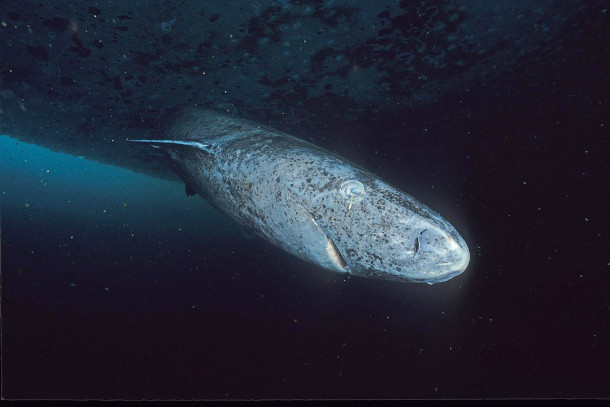
With a lifespan of several hundred years, Greenland sharks may be the longest living vertebrates on Earth and are estimated to reach sexual maturity at about 150 years old. Living on Earth’s Don Lyman reports in this note on emerging science about how enhanced activity of DNA repair genes may help Greenland sharks’ eyes avoid the usual degradation of aging.

- 1Note on Emerging Science: Long-Lived Greenland Sharks
Transcript
DOERING: In a moment, how cemeteries can be safe havens for bees. But first, this note on emerging science from Living on Earth’s Don Lyman.
SCIENCE NOTE THEME
LYMAN: The Latin name for the Greenland shark, Somniosus microcephalus, translates to “small-headed sleeper”, but these sluggish giants, which grow to 21 feet-long and can weigh over a ton, are the longest living vertebrates on earth. Scientists say these inhabitants of the cold waters of the North Atlantic and Arctic Oceans, can live to be hundreds of years old. Radiocarbon dating of eye lens tissue of Greenland sharks that died when accidentally caught in fishing nets revealed one specimen that was estimated to be around 400 years old. Scientists also estimated that Greenland sharks grow very slowly, approximately 1 cm (0.4 inches) per year, and don’t reach sexual maturity until they’re about 150 years old.
Biologist Lily Fogg, and her research team at the University of Basel in Switzerland, are trying to figure out how Greenland sharks live so long. To do so, they studied the sharks’ eyes. It wasn’t known if the sharks had much vision, and it was assumed that the sharks might be severely visually impaired. Fogg and her colleagues analyzed the eye tissue from 10 Greenland sharks, some of which were about 150 years old. They found that the cellular and molecular components of their eyes, that the sharks used to see in the dim light of the deep ocean were intact, probably due to enhanced activity of DNA repair genes, which likely keep tissues healthy over the long-term. The tissue in the eyes also looked like it avoided the degradation of aging.
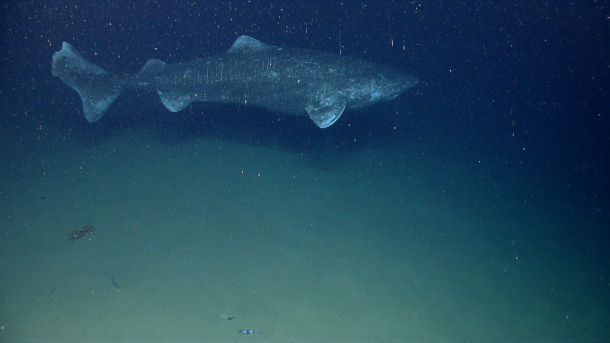
Fogg said that figuring out how Greenland sharks live longer than other vertebrates could possibly help to treat failing organs in aging people someday. That’s this week’s note on emerging science. I’m Don Lyman.