Ancient Greek Sites Rich in Biodiversity
Air Date: June 05, 2026
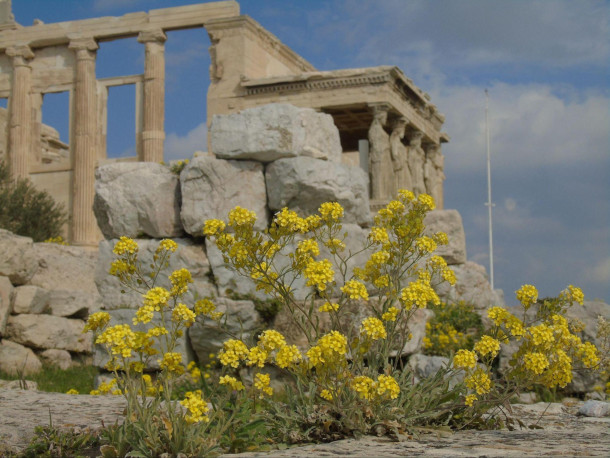
Today, the Agora and Acropolis of Athens, Delphi on Mount Parnassus, and other Greek archaeological sites preserve not only cultural heritage, but also animal and plant species, including some that were around in ancient times and described in historical accounts and Greek mythology. Panayiotis Pafilis is a professor of animal diversity at the National and Kapodistrian University of Athens who has studied this abundance of life at ancient sites, and he speaks with Host Aynsley O’Neill.

- 1Ancient Greek Sites Rich in Biodiversity
Transcript
O’NEILL: If you’re lucky enough to visit Athens, at the top of your list would likely be the sacred Acropolis, perched high above the city, and the Agora just next door, the heart of public life and democracy in ancient times. The Agora was where Socrates, Plato, and Aristotle pioneered Western philosophy, including natural philosophy, the precursor to what we now call science. Aristotle is even regarded by some as both the first true biologist and scientist. Today, the Agora, Acropolis, and other Greek archaeological sites preserve that cultural heritage, but also a number of animal and plant species, including some that were around in ancient times. A study led by the Greek Ministry of Culture, Natural Environment, and Climate Change Agency, and the National and Kapodistrian University of Athens measured the biodiversity of 20 archaeological sites and found an abundance of life. Lead author Panayiotis Pafilis is a professor of animal diversity at the National and Kapodistrian University of Athens, and he joins me now. Welcome to Living on Earth, Professor!
PAFILIS: It's nice to meet you.
O'NEILL: So, your study surveyed species in 20 different Greek archeological sites. What did you find in this?
PAFILIS: We ended up having 4,405 species of animals and plants that live inside those archeological sites. I don't know whether, you know, this figure sounds impressive or not, but in Greece we have a total of around 31,000 species all around the country, and when we are working in this project, we focus only on these 20 sites that covers a mere 0.018% of the total Greek area. So, we found a rough 11% of the total biodiversity of the country in only 0.018% of the area. So, this is really something. And it's really very interesting that this initiative started not from biologists or from zoologists or botanists, but from the Ministry of Culture of Greece, and from herself, the Ministry of Culture, Dr. Lina Mendoni. So it was an idea that came from archeologists as an invitation to biologists to join forces to study what happens inside archeological sites in terms of biodiversity.
O'NEILL: And what makes an archeological site an ideal place for biodiversity?
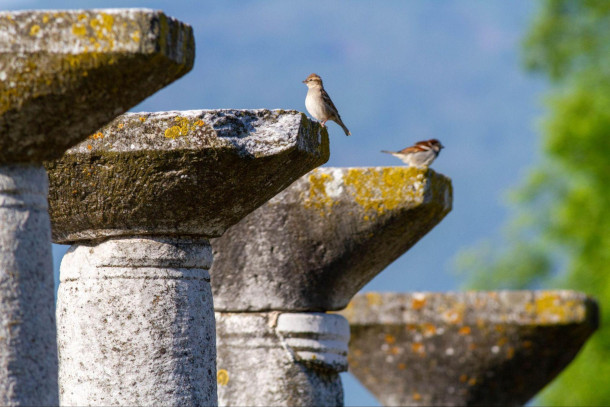
PAFILIS: Most important, in our case, the archeological sites are effectively protected since early 19th century. In other words, those places, they are protected areas not only for antiquities but also for wildlife or biodiversity. We can get both in the price of one, if I may say so. So, that means nobody will hunt birds, nobody will harass snakes, and the result of all this is that we have very dense populations when we compare them with populations in the surrounding area, and also the animals, especially reptiles, they were really very tame, that there's a syndrome in island biology, we call it "island naivete," which means you don't know any enemies, so people inside an archeological site, they behave completely in a different way compared to outside, so snakes that normally typically would have the head crushed from a person walking, walking by, inside the site are well protected.
O'NEILL: So help us set the scene. If I were to walk up to one of these archeological sites, what am I going to be seeing there?
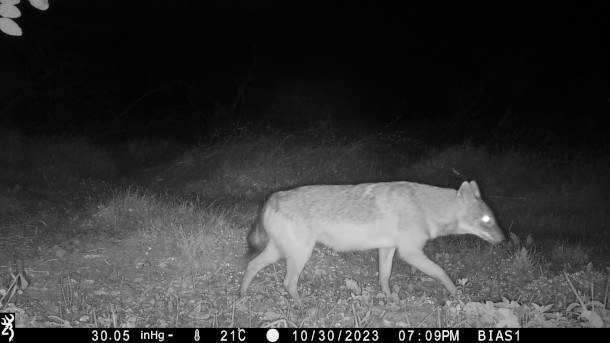
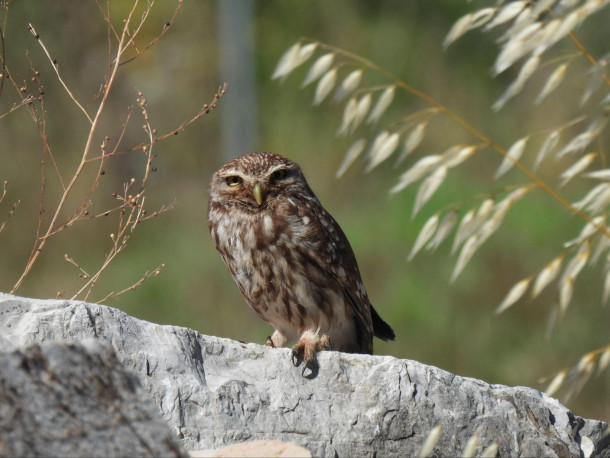
PAFILIS: Okay, so relax a little bit and start to hear, and it's impressive, the diversity and variety of sounds you can hear there. It's birds, it's frogs, insects. And then try to see small creatures creeping, crawling, running. There are lizards, there are snakes, there are small mammals, there are snails, and also plants. The plants are everywhere.
O'NEILL: Now what sort of animals or plants are there that you've seen that were particularly exciting for you?
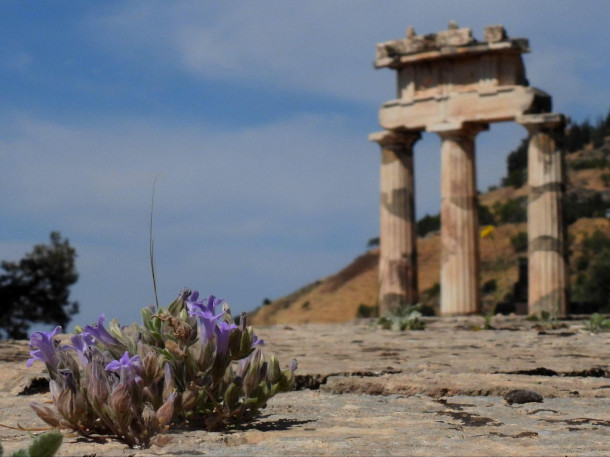
PAFILIS: So, we found many different species of birds, many different species of plants, but also species that one would never expect inside the archeological site, including foxes or badgers or wild boars. In one case, we try an experiment, so we set our cameras at night, and it was impressive to see, you know, the animal traffic jam inside the archeological site. So, from big mammals and big raptors of birds to tiny snails, we found many, many different species. We spotted many species that we were unaware of their presence in Greece. So, that was the very first record of their presence in Greece, like a very small grass species that was discovered in the archaeological site of Nicopolis. So, in this city, we found a species that we knew it so far from Asia Minor. That was the first time we discovered in the west part of Greece. And in the Oracle of Delphi, we found a small, a tiny snail that was a new species for science. So we were actually in the procedure to describe the new species. It’s tiny, is like a two millimeters the size of its shell, and it's a troglodytic species, that means that lives only inside caves that has water somewhere inside, so really, really very special findings.
O'NEILL: And tell us, what it was like on one of those days when you spotted one of these things that you didn't expect to see.
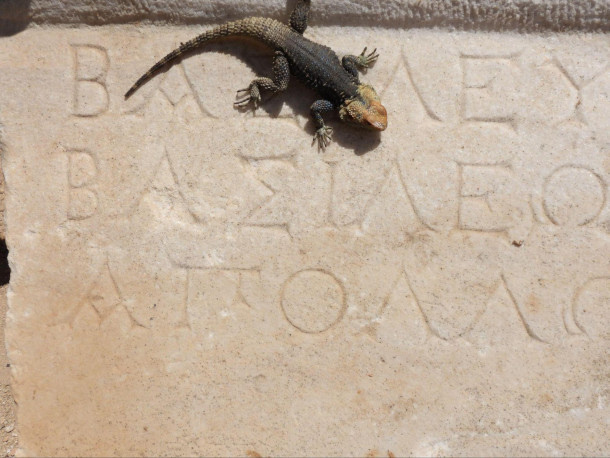
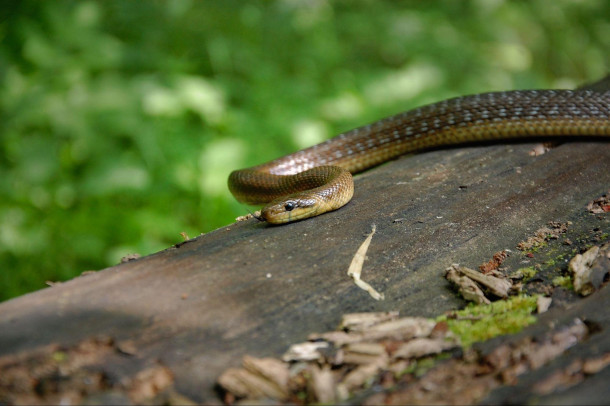
PAFILIS: Yeah, again, a very good question. You know, in the beginning we enter those places. Okay, I will speak for myself, I don't want to speak for my other colleagues, a little bit with an arrogant eye, that I know everything here, because I knew the place, you know, the places surrounding archeological sites, and it was a surprise to discover more and more new species like the one I mentioned earlier. But, also it's this very special feeling to discover species that we knew they were there in, during antiquity, and to find them again in the same place. For instance, in the Oracle of Delphi, according to the myths, the legend, Zeus said two eagles that they fly in the diverse directions, and after, you know, covering the whole globe, they met again in Delphi, so that is, the Oracle of Delphi was built there, and we find exactly the same species of eagle flying over the Oracle of Delphi today. The same goes for snakes in Epidaurus. Epidaurus was one of the first hospitals in antiquity, and there was a building in its structure, it was half under the surface of earth and inside ancient Greeks raised snakes, and the patients will enter this place. The snakes will touch them, and then Aesculapian, the god of medicine in ancient Greece, will visit the patients during their night's sleep to provide the cure, and we fight the exact same species, the Aesculapian snake– that's this is the vernacular name of the species– living there in the exact same spot. That was really amazing. It was like having a window from where we can see exactly the same things that people living there, like 25 centuries ago, would see.
O'NEILL: It's incredible that you say that about the snake, because I know many of us, even if we're not familiar with that story, would be familiar with the symbol of healthcare and medicine that includes the snake going up the staff, and so it's cool to see that that's where it comes from, and they're still there.
PAFILIS: Yeah, yeah, exactly. It's exactly like that, as you describe it.
O'NEILL: And for you and your colleagues, in particular, what's next? What further research are you planning on doing?
PAFILIS: So, I'm in the happy position to say that now we are in BIAS phase two, which is the continuation of the project we're talking about now, and we add 36 new archeological sites all around the country, and the novelty now is that we're working together with archeologists in research. So, from our part, biologists, we do exactly the same thing. We go out to conduct field work, but our archeologist colleagues, what they do is they try to find their archives and artifacts and statues in coins, in literature, traces of wildlife. So, what we try to do here is to compare what we know from those sources used to live in these places and to see whether they're still there. And in our times, the times of climate change, that we have this crazy biodiversity loss, this is really very important.
O'NEILL: Well, when I think about this overall study, it's, it's really sort of a beautiful marriage between the historical conservation, the natural conservation; and the study was planned, but the results weren't planned. So, to what extent do you feel like this pairing between the historical and the natural, how does it resonate with Greek values in particular?

PAFILIS: I would say international values. Exactly, the project was not exactly planned, but there is a new term that was coined within this decade, it's the "cultural landscape," which is the landscape from the combined actions of human and nature. So, inside those places we see, in places like Greece or Italy or Middle East countries where humans are present for millennia, how both human and wildlife shape the environment, so inside those places you can find, you know, the fruits of this, if I may use the term, collaboration, and it's also very important to mention that in many cases an archeological site was also a UNESCO site and a Natura 2000 site, and that says a lot. So UNESCO protect the cultural heritage and Natura 2000 network protect the wildlife, so we see in action that those places is exactly what you just said, it's a meeting point of culture and nature.
O'NEILL: Panayiotis Pafilis is a professor in animal diversity at National and Kapodistrian University of Athens. Professor Pafilis, thank you so much for taking the time with me today.
PAFILIS: Thank you very much. It was really a pleasure.