"The Unexpected"- Mallards Diving
Air Date: December 12, 2025
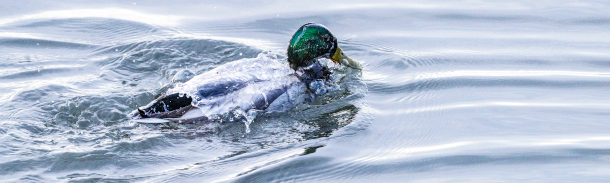
Living on Earth’s Explorer-in-Residence, Mark Seth Lender provides a refuge for hungry ducks during hunting season. He also observed something remarkable: these “dabbling” ducks have learned to dive for the seed he offers them.

- 1The Unexpected"- Mallards Diving
Transcript
CURWOOD: Around this time of year some animals need to keep their wits about them, lest they end up as a hunter’s trophy, dinner, or down jacket. So, at his home on the Connecticut coast, Living on Earth’s Explorer in Residence, Mark Seth Lender provides a seasonal refuge for hungry puddle ducks.
The Unexpected
Mallards & Red-breasted Mergansers
Stewart B. McKinney National Wildlife Refuge
© 2025 Mark Seth Lender
All Rights Reserved
The mallards are here. They are here every Fall. Common enough, we tend to name, dismiss, and fail to see how beautiful they really are. I am as guilty in this as anyone. If you fed the ducks when you were a kid these are the ducks you fed. And so did I. And I still do. Because, before our houses and our seawalls and driveways and ridiculous lawns that do not belong anywhere in the line of sight of salt spray, there would instead… be shallows. Of wild rice and grasses, and rocks and stones and green sea weed there for the mallards to eat. Instead we are here. And there is nothing to eat, or anyway, not much; for me feeding the mallards more than a memory is an obligation. Not bread, not popcorn which fouls up their insides. Seed. AS MUCH AS I CAN CARRY. Stored in galvanized barrels with heavy stones on the lids so that the winds of October and the storms that follow will not send them skittering like leaves.
Also in this season, the gunners come. In flat bottomed boats. Behind impenetrable screens made of reeds. I understand and I would not forbid it. But for 54 mallards I feed at my seawall, more sometimes, sometimes a few less, I create a sanctuary. I visit there every day. And if I am not on time – their time - the drakes call out to me, loud, their mates are murmuring, at the first inkling of daylight when forms are no more than shadows and no colors reach the eye. Throughout the cold season I come. At that last half hour before the night gives way and the day begins, until the end when we no more hear the guns. The mallards move towards me, not away.
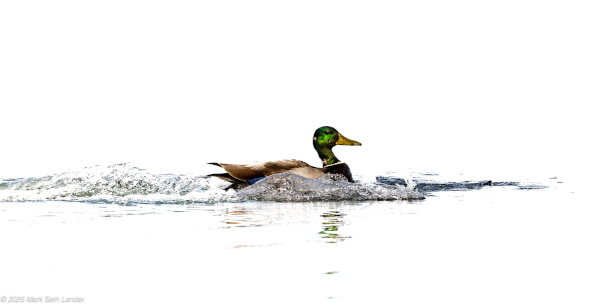
High tide is early today. Full up to just below the top of the seawall. Much of the seed sinks down. I watch and wait, and the mallards dive to feed. Only some. Not all. A percentage that never grows nor diminishes. On high tide days. This is the third year in a row.
Except - Mallards do not do this.
In the bird books – all of them - mallards are dabbling ducks, not diving ducks. And dabblers do not dive. We tend to ignore what we have been told can’t be. Yet here it is. The water is deeper, the natural grasses just like the seed I contribute are submerged more and more of the time. And in response mallards, male and female both have the learned the capacity to hold their breath, push with their feet, force their way to the bottom, and stay there! Seven, eight, nine seconds at a time! As the waters rise they will be the ones who prosper and survive.
While Darwin laughs up his sleeve.
CURWOOD: Living on Earth’s Explorer in Residence, Mark Seth Lender.