Living on Earth: November 28th, 2025
Air Date: November 28, 2025
Wildfire smoke is fouling air quality across the US with increasing regularity, and it carries a heavy toll. A September 2025 study published in the journal Nature found that every year around 40,000 Americans are dying from wildfire smoke, with more on the way as the planet warms. Senior author Dr. Marshall Burke, a professor in the Doerr School of Sustainability at Stanford University, joins Host Jenni Doering to discuss how air filters, face masks and low-intensity prescribed burning can help protect the public from this growing threat.

- 1Deadly Toll of Wildfire Smoke
- 2Underpaid Incarcerated Firefighters Get a Big Raise
- 3Wildfire Trauma and Recovery
- 4Stream Life is Thriving 5 Years After Oregon Fires
- 5Good Fire": How Cultural Burning Heals Land and People
- 6Life As An Incarcerated Firefighter
Deadly Toll of Wildfire Smoke
13 min read · 17 min listen
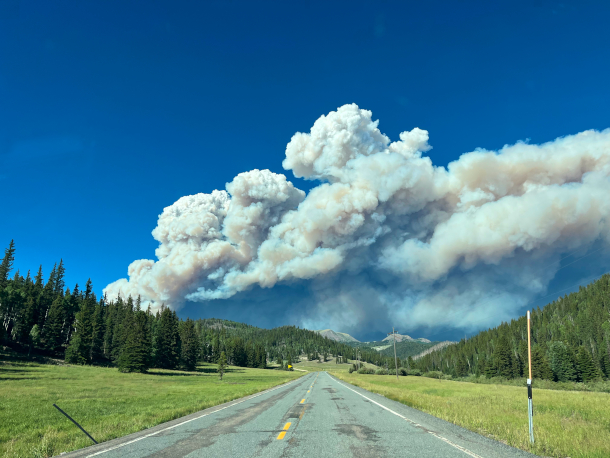
Wildfire smoke is fouling air quality across the US with increasing regularity, and it carries a heavy toll. A September 2025 study published in the journal Nature found that every year around 40,000 Americans are dying from wildfire smoke, with more on the way as the planet warms. Senior author Dr. Marshall Burke, a professor in the Doerr School of Sustainability at Stanford University, joins Host Jenni Doering to discuss how air filters, face masks and low-intensity prescribed burning can help protect the public from this growing threat.
Underpaid Incarcerated Firefighters Get a Big Raise
9 min read · 12 min listen
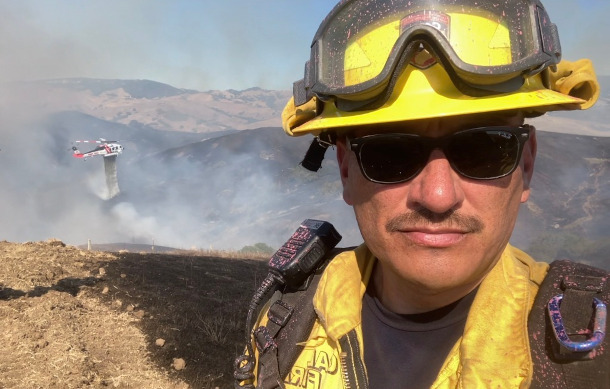
Around a third of the firefighters who battle wildfires in California are incarcerated, and until recently they were paid just $5 to $10 a day. Under a state law enacted in October 2025, incarcerated firefighters are now paid at least $7.25 per hour while actively fighting fires. Formerly incarcerated firefighter and current fire apparatus engineer for the state of California, Eddie Herrera, Jr., returns to Living on Earth to speak with Host Aynsley O’Neill about how this pay raise can help transform lives.
Wildfire Trauma and Recovery
5 min read · 7 min listen
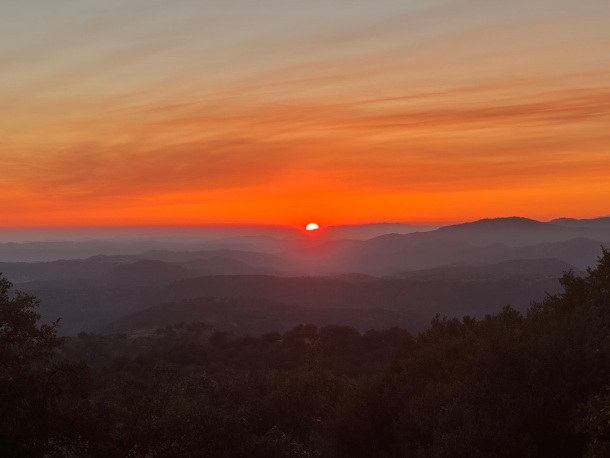
Wildfires can take a huge mental toll and people who live in wildfire-impacted communities may experience post-traumatic stress disorder, anxiety, and depression. Host Jenni Doering tells Host Aynsley O’Neill about her frightening childhood experience of the 2003 Cedar Fire in San Diego and they discuss emotional resilience strategies shared by Jyoti Mishra, a UCSD professor of psychiatry who co-directs the University of California Climate Change and Mental Health Council.
Stream Life is Thriving 5 Years After Oregon Fires
5 min read · 6 min listen
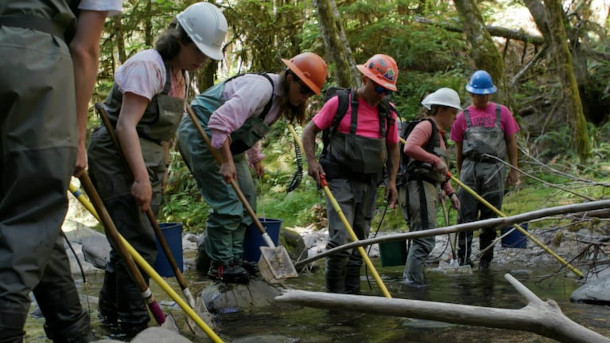
In 2020 Oregon faced its most destructive wildfire disaster, when more than a million acres burned in the “Labor Day” fires. The sheer size and severity of those fires gave scientists a unique chance to learn what happens after a massive burn. Jes Burns of OPB reports on the surprising resilience of fish and amphibians five years after the fires.
"Good Fire": How Cultural Burning Heals Land and People
13 min read · 18 min listen
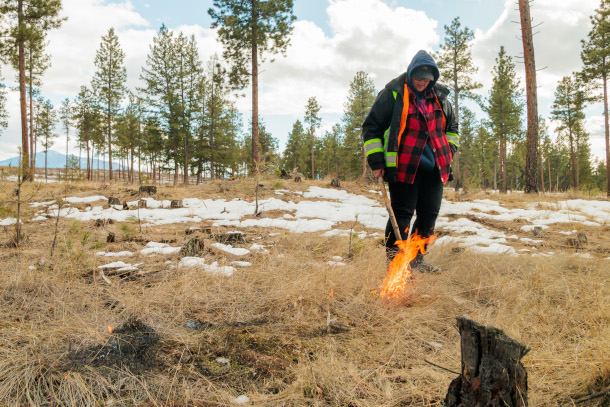
Around the world, Indigenous people have been using fire on the landscape for thousands of years. One such practice comes from the Métis tradition in Western Canada. Cree-Métis scientist Dr. Amy Cardinal Christianson is a senior fire advisor with the Indigenous Leadership Initiative and joins Host Aynsley O’Neill to share how this low-intensity “good fire” helps rekindle cultural traditions and cultivate healthier ecosystems.
Life As An Incarcerated Firefighter
11 min read · 15 min listen
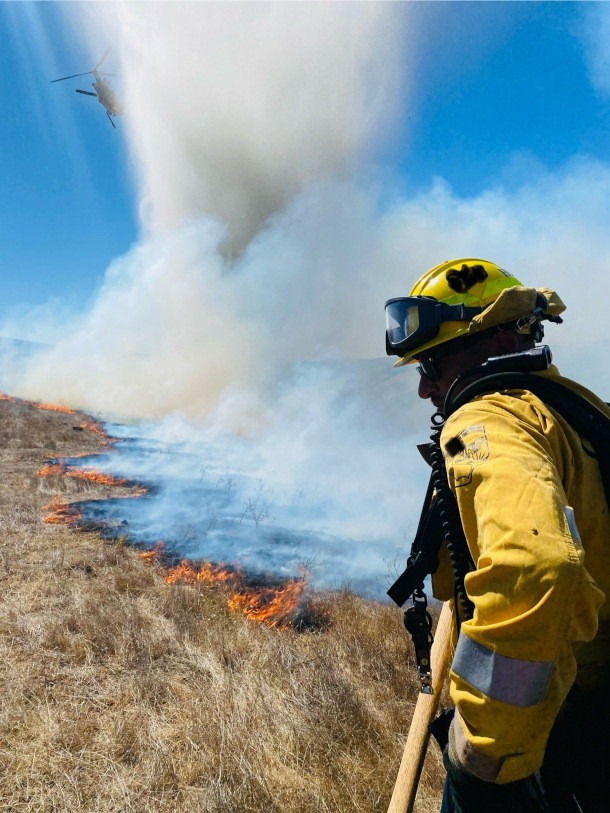
Around a thousand of the firefighters who battled blazes around southern California in January 2025 were incarcerated. They do essentially the same work as other firefighters but are paid as little as around $5 a day. Eddie Herrera Jr. shares with Host Aynsley O’Neill what it was like to serve as an incarcerated firefighter, and how the experience helped him forge a new life after prison as a professional firefighter.